
TL;DR — Key Takeaways
- ISO 27001 strengthens data security by building a structured Information Security Management System focused on protecting sensitive information.
- It helps organizations meet global data-security laws and reduce compliance risks across industries.
- Certification lowers cybersecurity threats through strong policies, controlled processes, and preventive security measures.
- Better security workflows reduce breaches, downtime, and costly recovery efforts.
- Rising cyberattacks make ISO 27001 a strong trust-building factor for clients, partners, and stakeholders.
ISO 27001 sets a robust Information Security Management System (ISMS) for businesses handling critical data from IT firms to service providers and beyond. Recent data shows nearly 96,700 valid ISO 27001 certificates globally in 2024, a clear indication of growing trust in data security.
By embedding structured security controls, clear risk management, and documented policies, ISO 27001 helps organizations operate safely, reliably, and with confidence. Given evolving cyber-risks, hiring an experienced consultant for certification becomes essential.
What is ISO 27001 Certification?
ISO 27001 Certification confirms that a business follows a strong and structured Information Security Management System to protect sensitive data. It shows the organization identifies risks, applies the right security controls, and handles information responsibly.
This certification builds customer trust, reduces the chances of cyberattacks, and helps companies meet global data-protection requirements. By earning it, businesses prove they take data security seriously and operate with a high level of discipline and reliability.
Why ISO 27001 Matters for Business?
ISO 27001 matters because it helps businesses protect their sensitive data with a structured and reliable security system. It reduces the risk of breaches, builds customer trust, and keeps operations running smoothly.
By setting clear rules for managing information, it strengthens accountability across teams and supports compliance with global data-security laws. In a world where cyberattacks keep rising, ISO 27001 gives companies the confidence to grow without compromising security.
How Does ISO 27001 Make Organizations Work Smarter and More Securely?
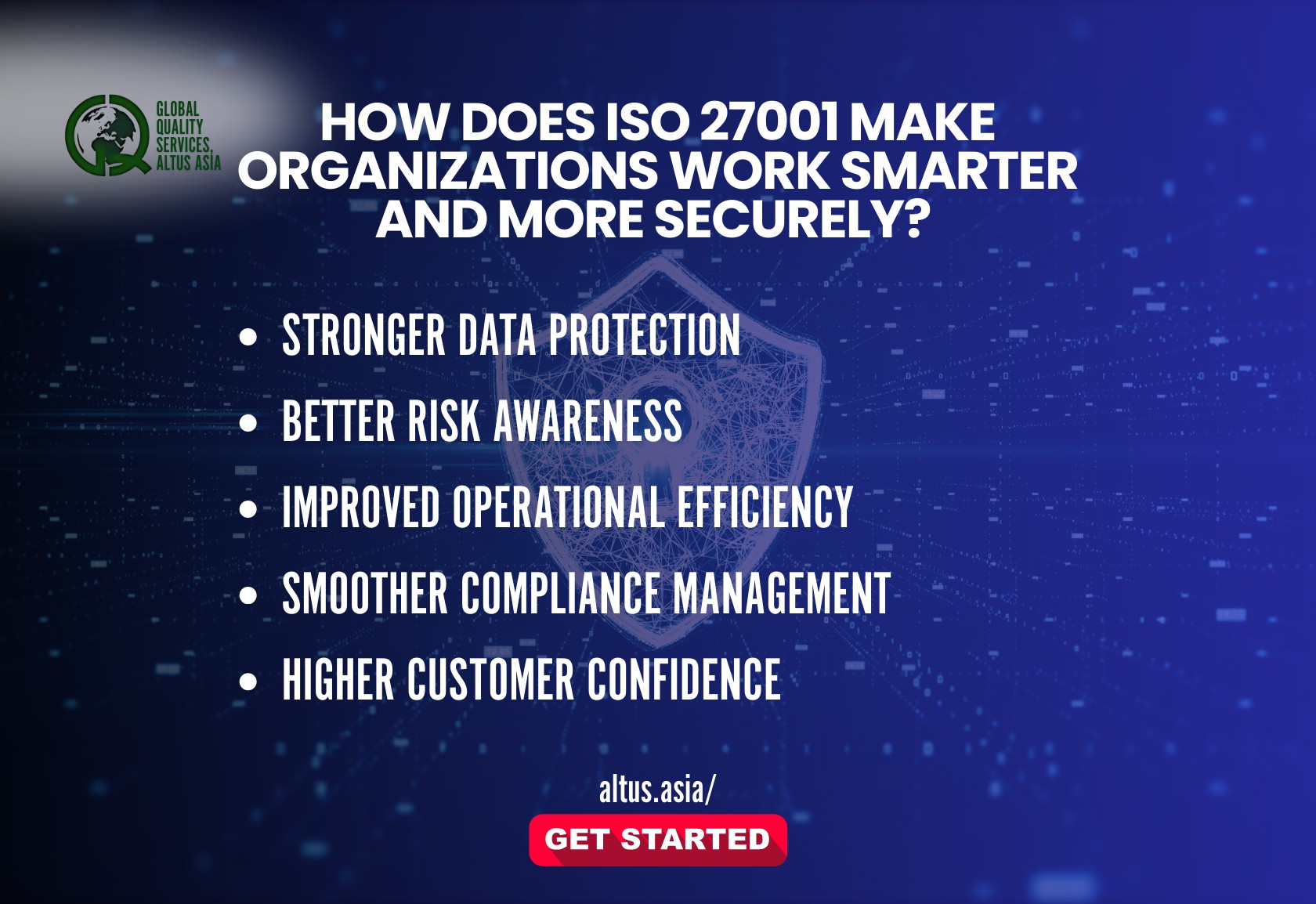
ISO 27001 creates a structured and secure way of working, helping teams protect information, prevent breaches, and manage daily tasks with more confidence and control. Here are the benefits:
Stronger Data Protection
ISO 27001 sets clear rules for handling information, ensuring teams safeguard data at every stage. This reduces breaches, builds trust, and keeps confidential details protected across all operations.
Better Risk Awareness
The framework encourages teams to identify vulnerabilities early, assess threats clearly, and apply practical controls. This proactive mindset prevents incidents and keeps daily operations running smoothly.
Improved Operational Efficiency
By organizing processes, removing confusion, and standardizing actions, ISO 27001 helps employees work faster and more confidently. Clear guidelines reduce delays, errors, and repetitive work.
Smoother Compliance Management
ISO 27001 aligns operations with global data-security laws and industry expectations, making audits easier and reducing compliance stress. Organizations stay ready for regulatory checks at any time.
Higher Customer Confidence
Clients trust businesses that manage data responsibly. Certification proves the organization protects information seriously, helping win new projects, strengthen relationships, and stand out in competitive markets.
How to Get ISO 27001 Certification?
ISO 27001 certification becomes easier when organizations follow a clear roadmap that strengthens security, aligns teams, and prepares processes for a successful audit. Here’s how the journey unfolds:
Conduct a Gap Analysis
Teams compare existing security practices with ISO 27001 requirements. This helps identify weaknesses, missing controls, and areas needing improvement before starting the official implementation process.
Build the ISMS Framework
Organizations establish an Information Security Management System that defines policies, procedures, and responsibilities. This structure guides teams in managing data securely and maintaining consistency across operations.
Perform Risk Assessment & Treatment
Teams analyze potential threats, evaluate their impact, and choose suitable controls from Annex A. This proactive approach ensures the organization handles vulnerabilities before they affect operations.
Implement Required Controls
Companies apply security measures such as access control, encryption, incident management, and monitoring. These controls strengthen protection and ensure that daily processes follow ISO 27001 standards.
Train Employees & Document Processes
Staff learn their security responsibilities, while the organization builds proper documentation for auditors. Accurate records demonstrate compliance and help maintain long-term security discipline.
Conduct an Internal Audit
An internal auditor reviews the ISMS, identifies gaps, and ensures the organization meets requirements. This step helps fix issues before the external certification audit.
Invite the External Auditor
A certified body audits the ISMS in two stages: documentation review and on-site assessment. Successful completion earns the organization ISO 27001 certification.
What Really Decides the Cost of ISO 27001 Certification?
The cost of ISO 27001 certification depends on factors like company size, number of employees, process complexity, and how mature your existing security practices are. Multi-location operations or businesses handling high-risk data may spend more.
External audit fees, documentation work, and training needs also influence the final cost. Overall, strong preparation helps reduce unnecessary expenses.
Partner with Altus Asia for ISO 27001 Certification
Partner with Altus Asia to make your ISO 27001 certification journey smoother, faster, and stress-free. Our experts guide you at every step with clarity and confidence. Strengthen your security, build trust, and grow fearlessly. Contact us today to get started.
FAQs
1. Is ISO 27001 mandatory for businesses?
No, it’s not mandatory, but many industries strongly prefer it. Companies adopt ISO 27001 to strengthen security, meet client expectations, and reduce risks in today’s growing cyber-threat landscape.
- How long does ISO 27001 certification usually take?
Most organizations achieve certification within 3–6 months. Timelines depend on existing security maturity, documentation readiness, the number of locations, and how quickly teams align with the ISMS framework.
- Does ISO 27001 apply only to IT companies?
No. ISO 27001 applies to any organization handling sensitive information, including finance, healthcare, consulting, manufacturing, education, and government entities requiring strong data protection and compliance.
- What happens after getting ISO 27001 certified?
Companies undergo yearly surveillance audits to ensure controls remain active and effective. These checks help maintain compliance, strengthen security, and support continuous improvement in the ISMS.
- Can small businesses benefit from ISO 27001?
Yes. ISO 27001 helps small businesses build trust, secure client data, reduce security risks, and win bigger opportunities by proving they follow reliable and globally recognized security practices.