The FSSC 24000 Social Management System Certification is a globally recognised standard focused on social responsibility. It helps organisations enhance ethical practices and strengthen accountability across all operations.
Recognised by the Sustainable Supply Chain Initiative in 2024, it promotes fair labour conditions, transparency, and responsible sourcing. As social compliance becomes increasingly important, working with a professional consultant makes the process easier. They help with documentation, audit preparation, and smooth certification.
What is FSSC 24000?
FSSC 24000 is a globally recognised certification that focuses on social responsibility and ethical business practices. It helps organisations create safe, fair, and respectful workplaces while ensuring transparent and sustainable supply chains.
This standard guides companies in managing social risks, improving accountability, and meeting global buyer expectations with confidence. Companies cna also follow
Which Companies Should Consider FSSC 24000?
FSSC 24000 certification is ideal for any organisation aiming to strengthen its social responsibility, transparency, and ethical governance across operations and supply chains. Here’s who benefits most:
- Manufacturing Companies
These businesses often rely on large workforces and suppliers. FSSC 24000 helps them maintain fair labour practices, ethical sourcing, and safer, more transparent production environments. - Retail and Consumer Goods Brands
Retailers can gain customer trust by ensuring their supply chains adhere to ethical and socially responsible standards, thereby enhancing both their brand image and long-term sustainability. - Logistics and Supply Chain Providers
With multiple partners and workers involved, this certification ensures ethical treatment, fair wages, and responsible practices at every link of the chain. - Hospitality and Service Industries
Hotels, restaurants, and service providers can utilize FSSC 24000 to promote fairness, workplace safety, and positive employee relations, which are key to customer satisfaction and reputation. - Public and Government Organisations
Implementing FSSC 24000 showcases commitment to social welfare, accountability, and ethical governance, setting a benchmark for responsible operations in public service sectors.
What are the Benefits of FSSC 24000 Certification?
Earning FSSC 24000 certification goes beyond compliance; it strengthens your organization’s reputation, trust, and operational integrity.
Key Benefits:
- Builds global credibility and stakeholder confidence.
- Demonstrates strong commitment to ethical and social responsibility.
- Enhances brand reputation and market competitiveness.
- Improves employee morale and workplace culture.
- Reduces legal, reputational, and operational risks.
- Strengthens supplier accountability and transparency.
- Aligns seamlessly with other ISO management systems.
- Opens doors to global partnerships and buyer approvals.
How to Get FSSC 24000 Certification?
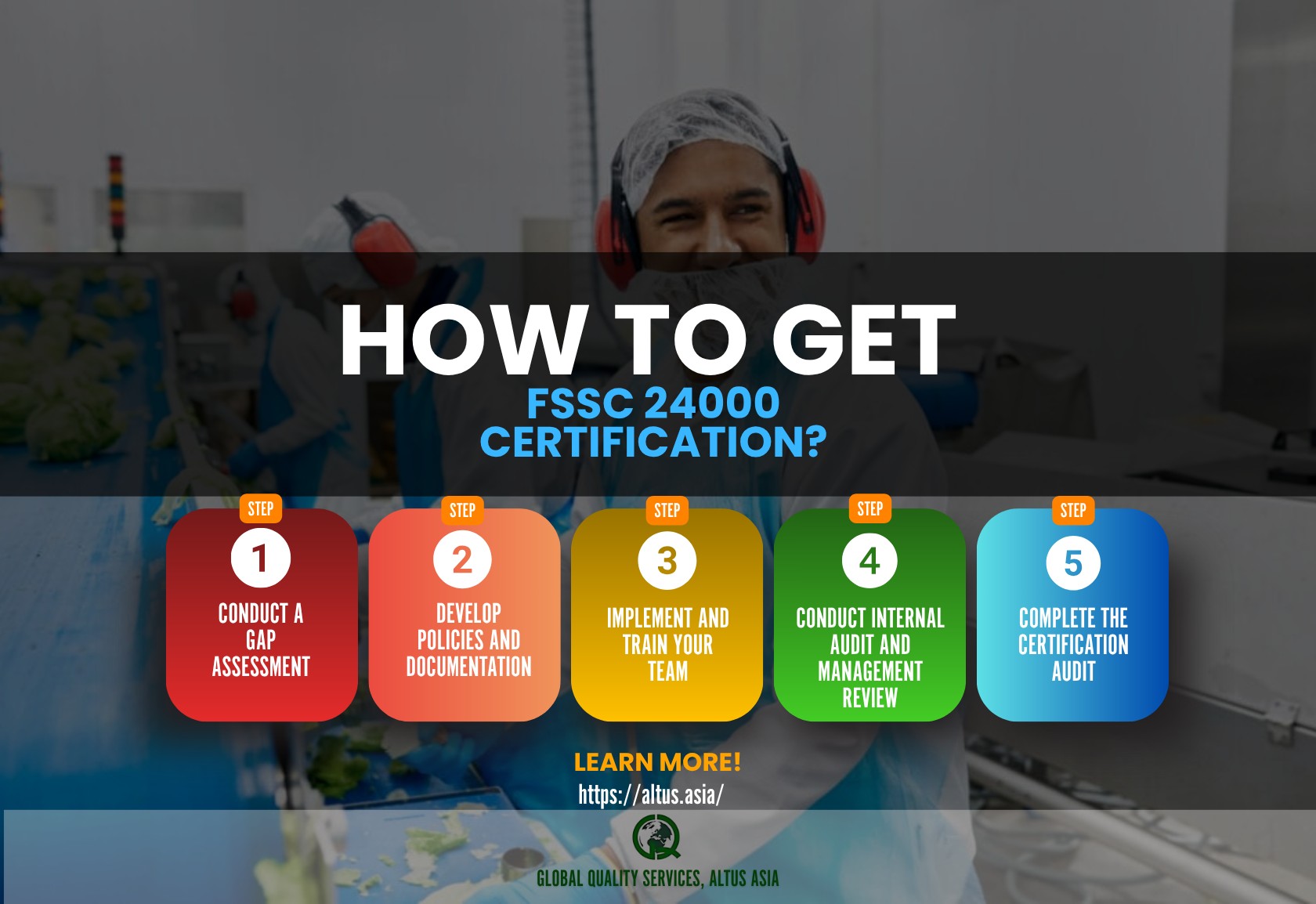
FSSC 24000 certification may seem complex, but with clear steps, it becomes a simple and structured path to compliance.
Step 1: Conduct a Gap Assessment
Begin by reviewing your existing practices to identify areas where they don’t meet FSSC 22000 standards. This step helps you identify areas for improvement in policies, employee welfare, and social responsibility systems, enabling you to build a focused improvement plan from the outset.
Step 2: Develop Policies and Documentation
Next, draft and organise key documents such as social policies, grievance procedures, and supplier ethics codes. These records reflect your organisation’s integrity and create a clear framework for responsible and transparent operations.
Step 3: Implement and Train Your Team
Put your new policies into action! Involve every department and conduct training programs to help employees understand the importance of ethical conduct, fair treatment, and compliance expectations. A well-informed team ensures that your goals are consistently met.
Step 4: Conduct Internal Audit and Management Review
Conduct an internal audit to verify that your system complies with FSSC 22000 requirements. Use the management review to discuss results, close any gaps, and refine your approach before the final certification audit.
Step 5: Complete the Certification Audit
Invite a recognised certification body for the final evaluation. Once they verify that your system meets all FSSC 24000 criteria, your organisation earns official certification proving your strong commitment to ethical, compliant, and socially responsible operations.
Documents You Will Need for FSSC 24000 Audit
Strong documentation is the backbone of your FSSC 24000 certification journey. It highlights your organisation’s dedication to ethical conduct, accountability, and continuous improvement, while providing auditors with the evidence they need to verify compliance.
Key Documents to Keep Ready:
- Internal audit findings and management review records
- CAPA logs for corrective and preventive actions
- Complaint and grievance resolution records
- Legal and regulatory compliance evidence
- Social responsibility policy and objectives
- Supplier ethics and sourcing guidelines
- Risk assessment and impact evaluation reports
- Employee training and awareness records
- Performance tracking and improvement reports
- Stakeholder communication and feedback evidence
What is the Timeline and Audit Cycle of FSSC 24000?
The FSSC 24000 certification follows a structured three-year cycle. It begins with the initial certification audit, followed by annual surveillance audits to verify continued compliance.
In the third year, a recertification audit is conducted to renew the certification. Maintaining documentation, conducting internal audits, and performing regular reviews ensures consistent social media management performance throughout the cycle.
FSSC 24000 Certification Cost Factors
The total cost of FSSC 24000 certification can vary from one organization to another. Here’s a quick look at the key factors that shape your investment:
- Company Size and Locations
Larger organizations or those with multiple sites typically pay more, as auditors require additional time to review each location’s processes and documents in detail. - Current System Maturity
If your existing management system already aligns with ISO standards, you’re ahead of the curve. Fewer gaps mean less effort, faster progress, and lower overall costs. - Industry Type and Risk Profile
Industries such as manufacturing, logistics, or heavy processing involve higher social and operational risks, requiring deeper evaluations, which can result in a slight increase in cost. - Audit Duration and Schedule
The total audit time depends on your level of preparedness. Well-organized documentation and trained teams can significantly reduce both the audit period and related expenses. - Consultant and Training Support
Hiring experienced consultants may feel like an added expense, but it’s actually an investment. Expert guidance minimizes errors, speeds up certification, and saves valuable time and resources in the long run.
Is There a 90-Day Plan to Get FSSC 24000 Certified?
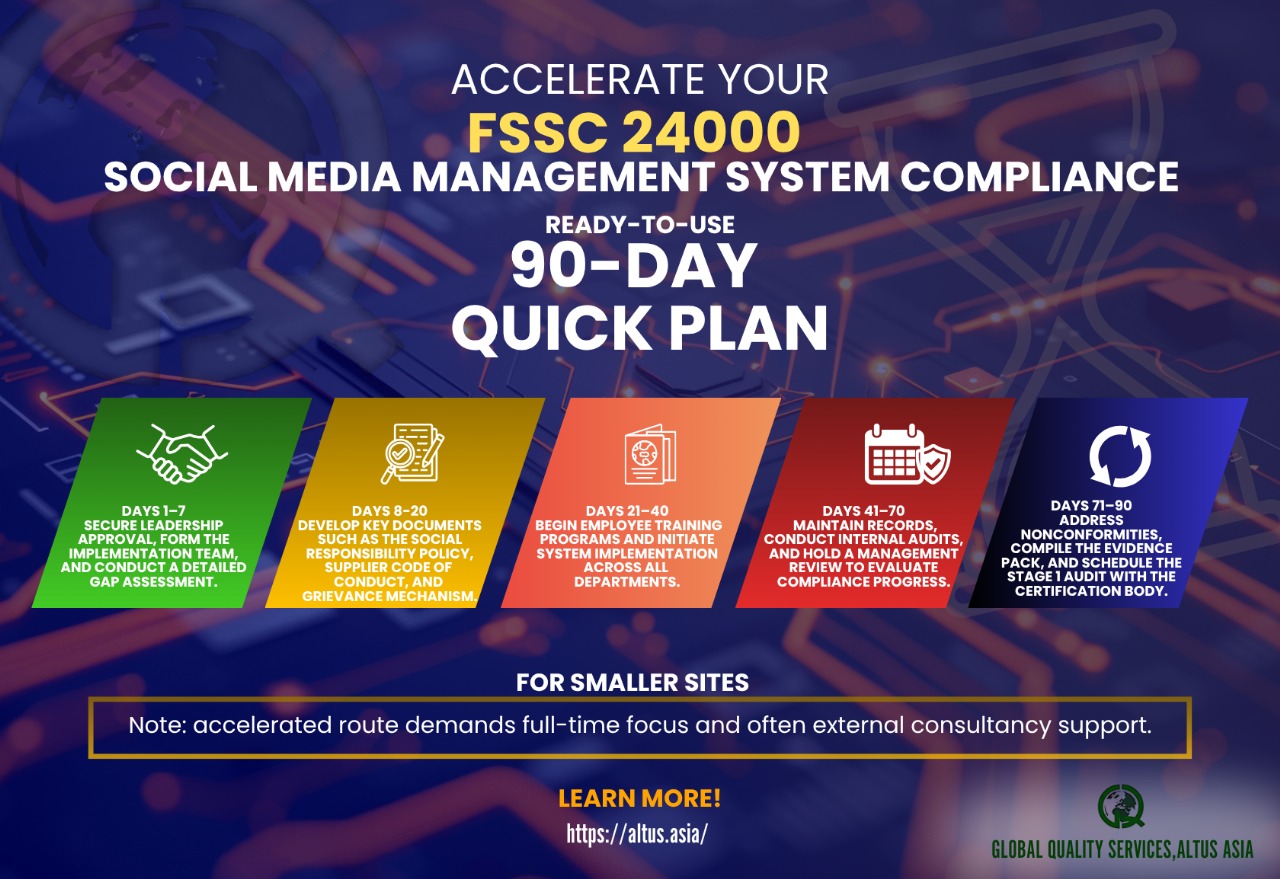
With a clear plan, the right consultants, and well-timed audit preparation, your organization can secure FSSC 24000 certification in as little as 90 days.
Quick tip: Stay ahead by organizing your documents early. Most delays occur due to missing records. Keeping everything ready from the start ensures a faster, smoother, and more confident certification process.
Begin Your Certification Journey with Altus Asia
Fast-track your FSSC 24000 certification with Altus Asia, your reliable partner in compliance and social responsibility. Our experienced consultants take the stress out of the process, handling everything from documentation to audit preparation with precision and care. Let’s make your certification journey smooth, confident, and truly rewarding. Connect with us today to get started!
FAQ’S
- What does FSSC 24000 focus on?
It focuses on fair labour practices, ethical sourcing, and human rights management within a structured Social Management System. The standard ensures organisations build socially responsible, transparent, and sustainable operations across their supply chains. - Is it mandatory to have FSSC 22000 before applying for FSSC 24000?
No, it’s not mandatory. FSSC 24000 functions independently and focuses on social and ethical performance, while FSSC 22000 specifically deals with food safety management systems. - How long does certification take?
The certification process usually takes around 3–4 months. However, the duration may vary depending on your organisation’s readiness, documentation quality, and employee training. - What industries can apply?
Any manufacturing, retail, logistics, or consumer goods company can apply for FSSC 24000. It’s ideal for organisations aiming to improve workplace conditions and demonstrate strong social responsibility. - What’s the validity of certification?
FSSC 24000 certification remains valid for three years. During this period, annual surveillance audits are conducted to ensure continuous compliance with the standard. - How is FSSC 24000 different from a corporate social responsibility (CSR) report?
CSR reports are voluntary statements of a company’s ethical efforts, often unaudited. FSSC 24000, on the other hand, is a verifiable certification that confirms social compliance through independent assessment. - Who accredits the auditors?
Auditors are approved by licensed certification bodies recognised under the FSSC scheme. These bodies operate according to international standards set by the International Accreditation Forum (IAF) and ISO. - How can companies prepare for the audit?
Companies should begin with a gap analysis to identify areas needing improvement. Proper documentation of HR policies, supplier processes, and training on PAS 24000 requirements are also essential. - Does this certification cover subcontractors?
Yes, FSSC 24000 extends to subcontractors through supplier monitoring and management systems. Organisations must ensure contractual obligations and ethical standards are met throughout the supply chain. - What are the most common non-conformities?
Common non-conformities include unrecorded grievances, incomplete social risk assessments, and missing corrective action plans. Regular audits and internal reviews help address these issues proactively.