
TL;DR — Key Takeaways
- ISO 22301 helps your business stay operational during unexpected disruptions by building a solid Business Continuity Management System.
- It reduces downtime, financial loss, and chaos by preparing your team with clear recovery plans and tested emergency procedures.
- Certification improves resilience, strengthens customer confidence, and shows you can deliver consistently even in a crisis.
- It supports compliance with industry expectations and regulatory requirements for continuity and disaster preparedness.
- With increasing outages and risks today, ISO 22301 acts as a powerful trust-builder for clients, partners, and stakeholders.
In 2025 alone, organizations reported an average of 86 outages per year, underlining how unpredictable disruptions can cripple businesses. That’s why getting ISO 22301 Certification matters. It helps build a solid Business Continuity Management System (BCMS), ensuring your operations keep running smoothly even when a crisis strikes.
With robust recovery plans, clear procedures, and tested responses, you minimize costly downtime and build lasting trust with clients. To navigate this smoothly and stay audit-ready, hiring an experienced consultant can make all the difference.
What is ISO 22301 Certification and Why Does It Matter Today?
ISO 22301 is an international standard that helps organizations design, implement, and maintain a Business Continuity Management System. It ensures that critical operations continue with minimal impact during emergencies. From IT outages to natural disasters, ISO 22301 prepares your business to respond quickly, recover faster, and maintain customer trust.
How Does ISO 22301 Keep Your Business Running During Crises?
ISO 22301 keeps your business prepared, protected, and resilient by ensuring critical operations continue smoothly even when unexpected disruptions strike.
ISO 22301 strengthens operational resilience by ensuring:
- Risk assessments to identify vulnerabilities
- Impact analysis to prioritise critical processes
- Emergency response procedures
- Backup plans for resources, communications, and teams
- Regular drills and testing
This structured approach ensures your business can withstand disruptions and bounce back without major losses.
What Problems Does ISO 22301 Solve for Modern Organizations?
Today’s organizations face unpredictable risks—cyberattacks, server failures, pandemics, supply chain disruptions, and utility outages. ISO 22301 solves these challenges by:
- Reducing downtime
- Minimizing financial losses
- Ensuring regulatory compliance
- Protecting brand reputation
- Keeping customers informed and confident
It shifts your organization from reactive firefighting to proactive preparedness.
Who Should Consider ISO 22301 Certification?
ISO 22301 is useful for any organization where downtime can cause financial, operational, or reputational damage. It’s especially relevant for:
- IT & Cloud Service Providers
- Banks and Financial Institutions
- Healthcare and Pharma
- Manufacturing Units
- Telecom & Data Centres
- Logistics, Transport & Supply Chain
- Government & Public Services
- Retail & E-commerce
If your business must stay operational no matter what, ISO 22301 is essential.
What are the Core Requirements of ISO 22301?
ISO 22301 outlines essential requirements that help organizations identify risks, protect critical operations, and maintain a structured, reliable business continuity framework.
To achieve certification, your organization needs to:
- Define business continuity objectives
- Conduct Business Impact Analyses (BIA)
- Identify risks and prioritize critical operations
- Develop recovery plans and response strategies
- Establish communication protocols
- Train employees for emergencies
- Conduct internal audits and regular testing
- Document all BCMS procedures
These requirements ensure a well-structured, practical continuity framework.
How Does ISO 22301 Strengthen Customer Trust and Market Reputation?
Customers expect reliability. ISO 22301 helps you demonstrate:
- Preparedness for unexpected disruptions
- Ability to deliver consistent services
- Commitment to reliability and safety
- Reduced risks of downtime or service failures
Clients prefer working with resilient organizations. Certification enhances brand value, credibility, and competitive advantage.
What is the Process for Getting ISO 22301 Certification?
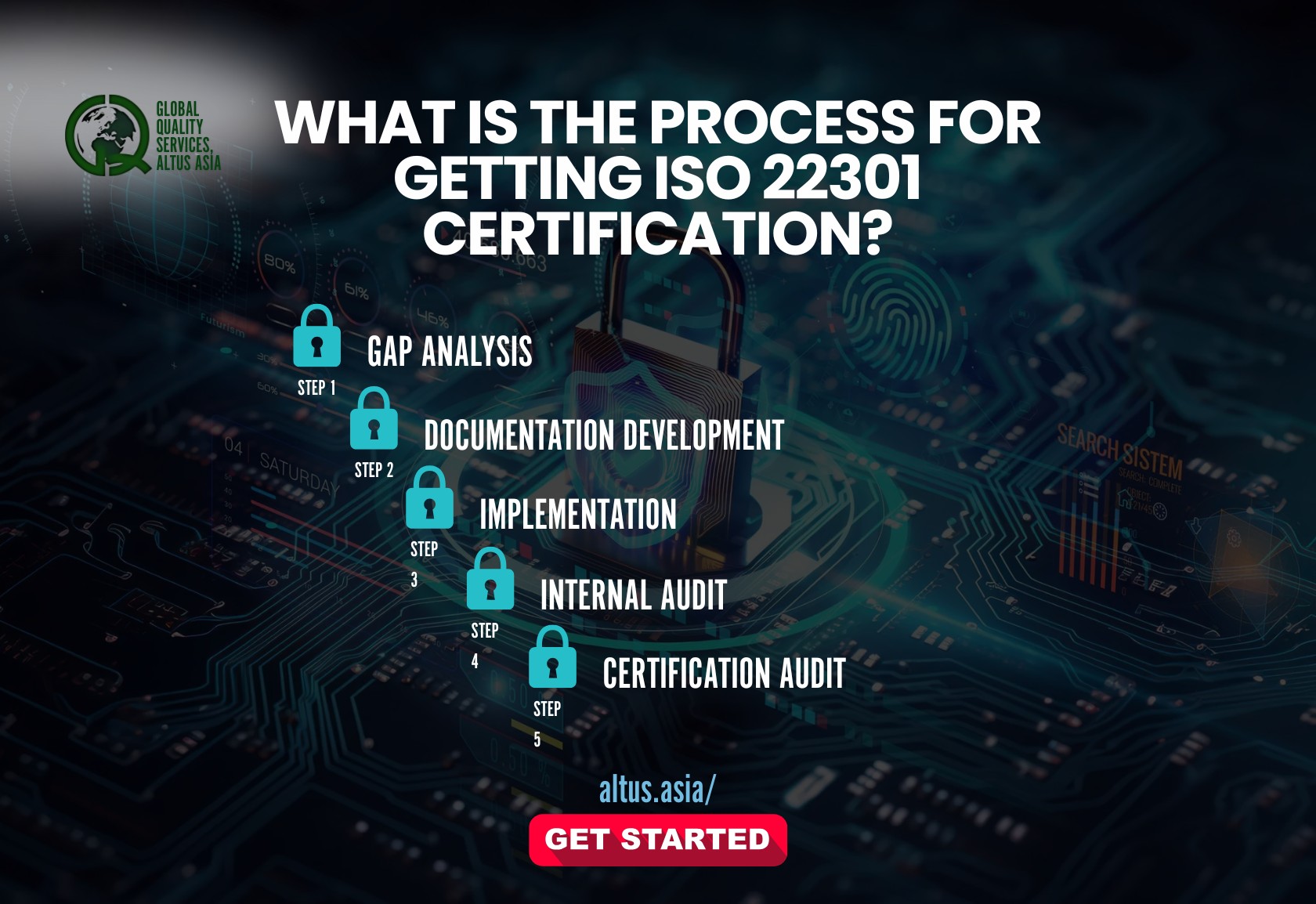
Here’s the step-by-step journey to achieving certification:
Step 1: Gap Analysis
Assess your existing business continuity practices, identify weaknesses, and compare them with ISO 22301 requirements to understand what improvements, controls, and documentation are needed before starting implementation.
Step 2: Documentation Development
Create essential BCMS documents such as policies, procedures, risk assessments, BIAs, and incident management plans that guide how your organization prepares for, responds to, and recovers from disruptions.
Step 3: Implementation
Put your business continuity strategies into action, train employees, establish emergency procedures, and ensure every team follows the documented processes consistently across operations.
Step 4: Internal Audit
Conduct an internal evaluation to check compliance, identify gaps or nonconformities, and ensure your BCMS is fully ready before the official certification audit takes place.
Step 5: Certification Audit
A recognized certification body reviews your documentation in Stage 1 and examines implementation in Stage 2 to confirm whether your BCMS meets ISO 22301 requirements.
Step 6: Certification Issuance
Once certified, your ISO 22301 certificate remains valid for three years, supported by yearly surveillance audits that ensure continued compliance and improvement.
How Much Does ISO 22301 Certification Cost for Businesses?
The cost varies depending on:
- Organisation size
- Number of employees
- Business complexity
- Number of locations
- Level of preparedness
On average, companies in India spend ₹1.5 lakh to ₹10 lakh, though the range may vary based on scope and audit needs.
How Long Does It Take to Get ISO 22301 Certified?
What Documents are Required for ISO 22301 Certification?
ISO 22301 requires specific documents that demonstrate your organization’s preparedness, continuity planning, and ability to respond effectively during unexpected disruptions or emergencies.
You’ll need:
- BCMS Policy
- Business Impact Analysis (BIA)
- Risk Assessment Reports
- Emergency Response Plans
- Communication Plan
- Recovery Procedures
- Training & Awareness Records
- Incident Logs
- Internal Audit Reports
These help auditors verify your BCMS maturity.
Is ISO 22301 Mandatory for Any Industry?
It’s not legally mandatory, but some sectors like banking, telecom, government, and IT services strongly prefer or require it for contractual and regulatory reasons.
How Does ISO 22301 Compare to ISO 27001?
- ISO 27001 focuses on information security
- ISO 22301 focuses on business continuity
- Together, they create a powerful resilience framework
- Both complement each other and enhance trust
Why Do Companies Hire Consultants for ISO 22301 Certification?
Companies hire consultants to simplify the certification journey, ensure accurate documentation, streamline implementation, and avoid delays or costly mistakes in meeting ISO 22301 requirements.
Consultants simplify the journey by:
- Preparing complete documentation
- Guiding implementation
- Training teams
- Conducting mock audits
- Reducing certification timelines
- Avoiding costly errors
Partner with Altus Asia for ISO 22301 Certification
Partner with Altus Asia for ISO 22301 Certification and strengthen your organization’s resilience with expert guidance. We simplify documentation, streamline implementation, and ensure smooth certification. Our team helps you build a reliable, disruption-ready BCMS that earns client trust. Contact us today to begin your certification journey.
FAQ’s
- What is ISO 22301 Certification?
ISO 22301 Certification confirms your organization has a strong Business Continuity Management System. It ensures you can handle disruptions, recover quickly, and continue essential operations with minimal impact. - Why is ISO 22301 important for businesses?
It helps businesses reduce downtime, protect revenue, and maintain customer trust during crises. With clear plans and tested processes, organizations respond faster and avoid major operational or financial losses. - How long does ISO 22301 Certification take?
The certification process usually takes 8–16 weeks, depending on your organization’s size, documentation readiness, continuity planning, and audit scheduling. Proper preparation often shortens the overall timeline. - Does ISO 22301 apply to small businesses too?
Yes, ISO 22301 benefits businesses of all sizes. Even small companies can strengthen resilience, reduce disruption risks, and create reliable continuity plans that protect daily operations and customer relationships. - Is ISO 22301 mandatory for any industry?
It’s not legally required, but many sectors like IT, banking, telecom, and government prefer or demand it to ensure uninterrupted services and reliable disaster preparedness from partners and vendors.