TL;DR — Key Takeaways
- RC 14001 improves chemical safety, environmental performance, and responsible operations across high-risk industrial processes.
- It strengthens compliance with global safety, health, and environmental standards required by modern supply chains.
- Certification builds operational consistency, transparent practices, and stronger trust among clients, regulators, and communities.
- Rising regulations and global expectations make RC 14001 essential for competitive, future-ready business operations today.
RC 14001 Certification helps chemical and manufacturing companies improve safety, environmental responsibility, and community trust. As global compliance demands rise, this certification ensures businesses follow rigorous responsible-care practices. In fact, companies under responsible-care programs have cut recordable injury and illness rates by around 24% since 2017.
The result: a safer workplace, fewer accidents, and stronger market credibility. That’s why many businesses now hire a consultant to guide the certification process and ensure smooth, compliant implementation.
What is RC 14001 Certification?
RC 14001 is a management system standard created for the chemical industry. It blends ISO 14001’s environmental framework with Responsible Care® requirements. This certification ensures your organization manages environmental risks, handles chemicals responsibly, follows safety norms, and improves overall process control.
It focuses on lifecycle impact, product stewardship, community safety, and transparent reporting. In short, RC 14001 helps companies run safer, cleaner, and more accountable operations from start to finish.
Why It Matters the Most for Businesses?
RC 14001 builds trust in industries where risk levels are naturally high. Clients and regulators expect businesses to prove they manage chemicals safely. This certification strengthens compliance, reduces accidents, improves public image, and enhances stakeholder confidence.
It also helps you win new contracts, especially with companies that mandate responsible care programs. In today’s competitive environment, RC 14001 becomes a powerful differentiator that shows your organization is serious about safety, sustainability, and ethical business practices. Companies can also follow ISO 14001, ISO 45001 and more for better security.
How to Get the RC 14001 Certification – Steps
Getting RC 14001 Certification involves a structured process that improves safety, compliance, and environmental performance. These steps help organisations build a strong, responsible care framework and achieve audit-ready systems.
Step 1 – Initial Assessment
Your team evaluates current safety, environmental, and chemical-handling practices. This step identifies system weaknesses, compliance gaps, and improvement areas needed to align your operations with RC 14001 requirements effectively.
Step 2 – Documentation
You create or upgrade policies, procedures, SOPs, risk assessments, and emergency plans. Strong documentation forms the backbone of the RC 14001 system and ensures consistent, audit-ready operational practices.
Step 3 – Implementation
All documented controls are put into action across departments. Teams follow new procedures, improve chemical handling, update safety practices, and integrate responsible care principles into everyday operations for reliable performance.
Step 4 – Internal Audit
A trained internal auditor reviews your system to detect non-conformities, weak areas, or process gaps. Corrective actions are taken to ensure the organisation meets RC 14001 expectations accurately.
Step 5 – Certification Audit
An accredited external auditor verifies your implementation, documentation, and compliance with RC 14001. They assess system maturity and ensure responsible care practices are fully integrated into your operations.
Step 6 – Approval & Maintenance
After successful audits, you receive RC 14001 Certification. Ongoing monitoring, periodic surveillance audits, and continuous improvement efforts help maintain long-term compliance and system effectiveness.
What are the Benefits of RC 14001 Certification?
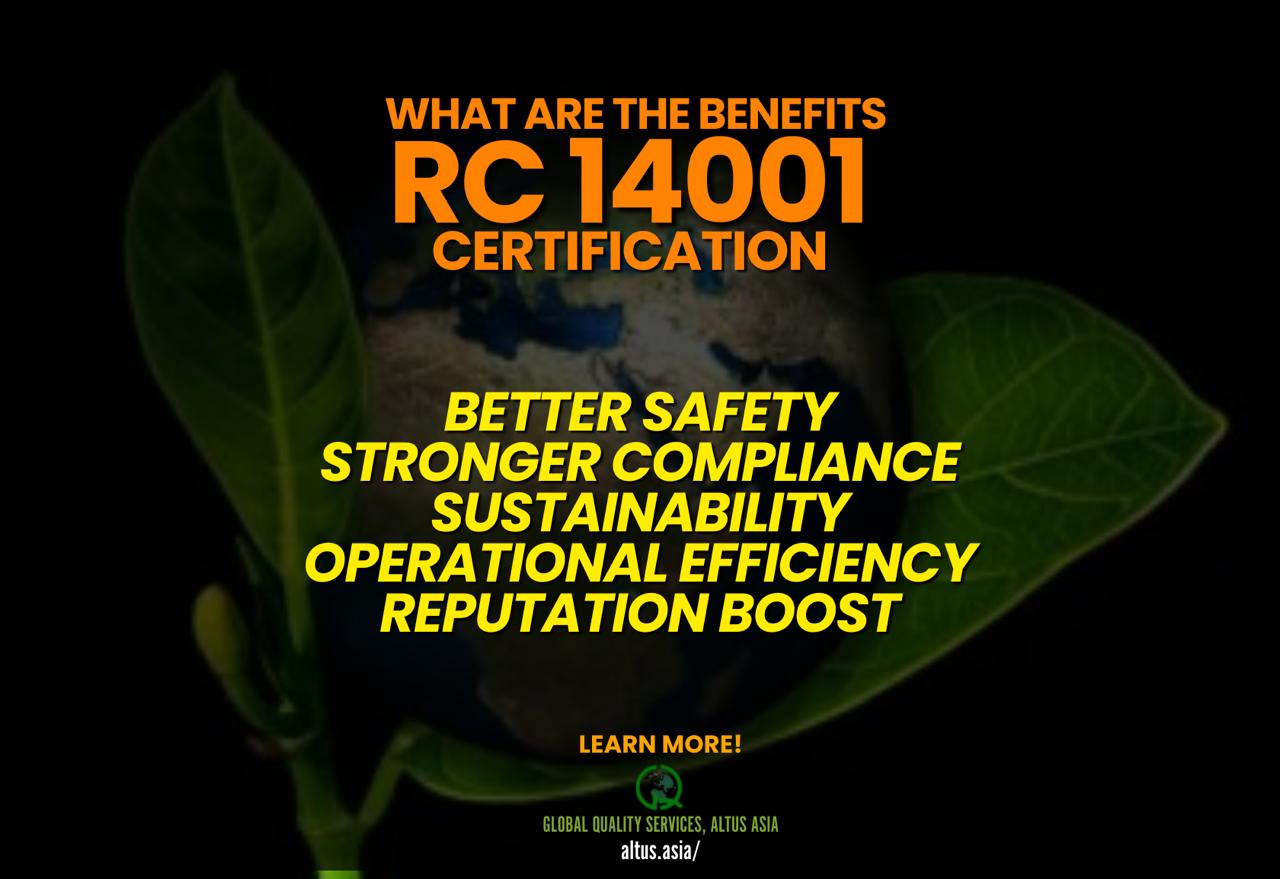
RC 14001 delivers measurable value by strengthening safety, compliance, and operational efficiency. It empowers businesses to reduce risks, protect the environment, and build stronger stakeholder trust effortlessly.
- Better Safety: Reduces workplace incidents and chemical risks.
- Stronger Compliance: Helps you meet global regulatory and customer requirements.
- Sustainability: Improves environmental performance and waste management.
- Operational Efficiency: Streamlines processes and reduces cost-heavy errors.
- Reputation Boost: Shows your organization follows responsible care commitments.
Why Choose Altus.Asia for RC 14001 Certification?
Altus.Asia offers expert consulting for RC 14001, ensuring smooth documentation, system setup, and audit readiness. Our experienced team guides you through every step, reduces certification challenges, and helps you achieve compliance faster.
We provide tailored solutions for the chemical and manufacturing industries, ensuring your processes meet global responsible care standards with confidence and clarity. Contact us to make your certification journey smooth and reliable.
FAQs
- Is RC 14001 only for chemical manufacturers?
No, it also applies to companies handling chemical products, logistics providers, and suppliers supporting chemical operations through storage, transport, or distribution activities. - How long does RC 14001 Certification remain valid?
It usually stays valid for three years, but businesses must undergo annual surveillance audits to maintain compliance and demonstrate ongoing responsible care performance. - Does RC 14001 replace ISO 14001?
No. RC 14001 builds on ISO 14001. It adds extra safety, health, and community-focused requirements, giving companies a broader and more responsible operational framework. - Can small companies get RC 14001 certified?
Yes. Small and medium companies can achieve certification with proper planning, documentation, and training. The standard is scalable and suits businesses of any size. - Does RC 14001 require special training for employees?
Yes. Employees must understand chemical safety, emergency response, and responsible care commitments. Regular training ensures proper implementation and safe daily operations.